

What is Transit-Oriented Development (TOD)?
TOD is a planning strategy that clusters a mix of uses and amenities around public transportation, making them more equitably accessible, reducing car dependency, and supporting urban vibrancy.
Pulse Expansion Overview
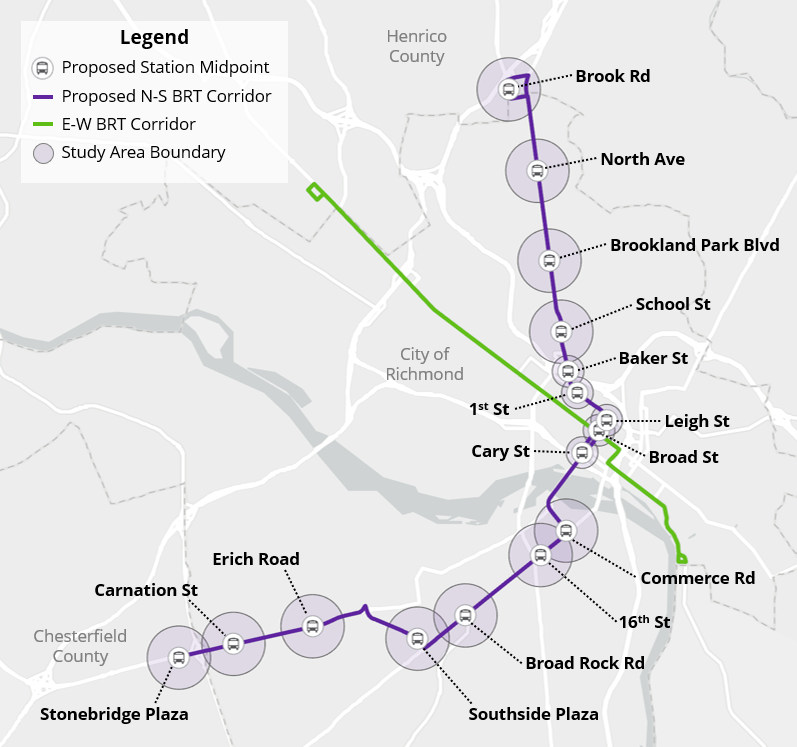
The North-South Pulse Expansion will create a high frequency transit connection between Northside, Downtown, and Southside Richmond through a 12-mile corridor featuring 30 stations. The project will connect riders to major employment centers, healthcare, education, housing, and community destinations across the region.
TOD Study Purpose
GRTC and the City of Richmond conducted a transit-oriented development study to to provide a visionary direction for future development along the proposed North-South Pulse Corridor. The study examines the potential to improve quality access to different modes of transportation, promote equitable economic growth, and attract additional ridership to the GRTC network.
Core Urban Design Principles of Transit-Oriented Development
Walkability
Station areas are designed to prioritize safe, comfortable, and direct movement on foot through well- maintained sidewalks, reduced conflict with vehicular traffic, human-scale building frontages, active ground- floor uses, and adequate lighting. Walkability ensures that the connection between transit and a person’s origin or destination is navigable without reliance on a motor vehicle

Density
Development concentrates people, housing, employment, and activity near transit nodes. Density is calibrated to the context of the neighborhood settings.

Mixed-Use
Developments integrate residential, commercial, and civic functions together, providing an active node. This principle creates destinations to live, work, and travel, catalyzed by transit infrastructure investment and connectivity.

Connectivity
Accessible links between transit services and surrounding neighborhoods.

Equitable Access
Effective TOD ensures the benefits of proximate transit service are available to all residents in the area, regardless of background. Creating this access requires proactive measures including preservation and production of affordable housing, anti-displacement considerations, and universal design standards.

Quality Public Space
Well-designed public spaces, including plazas, parks, and activated streetscapes, act as gathering spaces for civic life. They reflect an investment in community wellbeing and social infrastructure, helping create a distinct sense of place within the station area.
Corridor Goals
The North-South TOD study examines current conditions to target opportunities for growth along the corridor in ways that support current residents while attracting future residents and complementary development.

Expand Safe, Convenient Access to Transit and Regional Connections

Enhance Vitality and Stabilize Existing Communities

Encourage New Investment for Purposeful Growth, New Housing, and Economic Opportunity Along the Corridor
Station Area Plans
These plans were presented during our public meetings in October:

Presentation from Plan Preview Meeting
This recorded presentation:
- Highlights what we heard from residents, stakeholders, and partners throughout the study
- Explains the process for finalizing the station area plans based on public feedback
- Walks through the proposed goals for the corridor and what they mean for surrounding neighborhoods